2026年4月1日,我走进了西双版纳蛮砖国有林的深处。
出发前翻看资料,网络上很多人将桃子寨誉为"蛮砖之巅"。
我仅是笑笑。这些年在外品尝过不下十款标着桃子寨名号的茶,多数平淡无奇,未能在记忆中留下痕迹。
此番,我决心深入核心区,探访那一片最纯粹的茶林。
只有亲身走过这一程,才有资格写下这段真实的记录。懂茶的人,自能品出其中重量。
桃子寨原来不是一个寨
初闻"桃子寨"之名,不少人以为这是彝族或傣族村寨的称谓。
实则不然。桃子寨并非寨名,而是蛮砖国有林内一片茶区的专称。
近年来名声渐起,周边数座山头的茶叶都开始打着桃子寨的旗号推向市场。
正如许多知名小产区所经历的:名气越大,地理边界越模糊,真正的好茶反而愈加深藏不露。
蛮砖地处古六大茶山的中心,介于倚邦、易武等名山茶区之间,过去鲜有人单独品鉴其风味。
直到近几年,越来越多的资深茶客开始追寻蛮砖的醇厚底蕴,这片隐匿于密林中的小众产区才重新走进人们的视野。
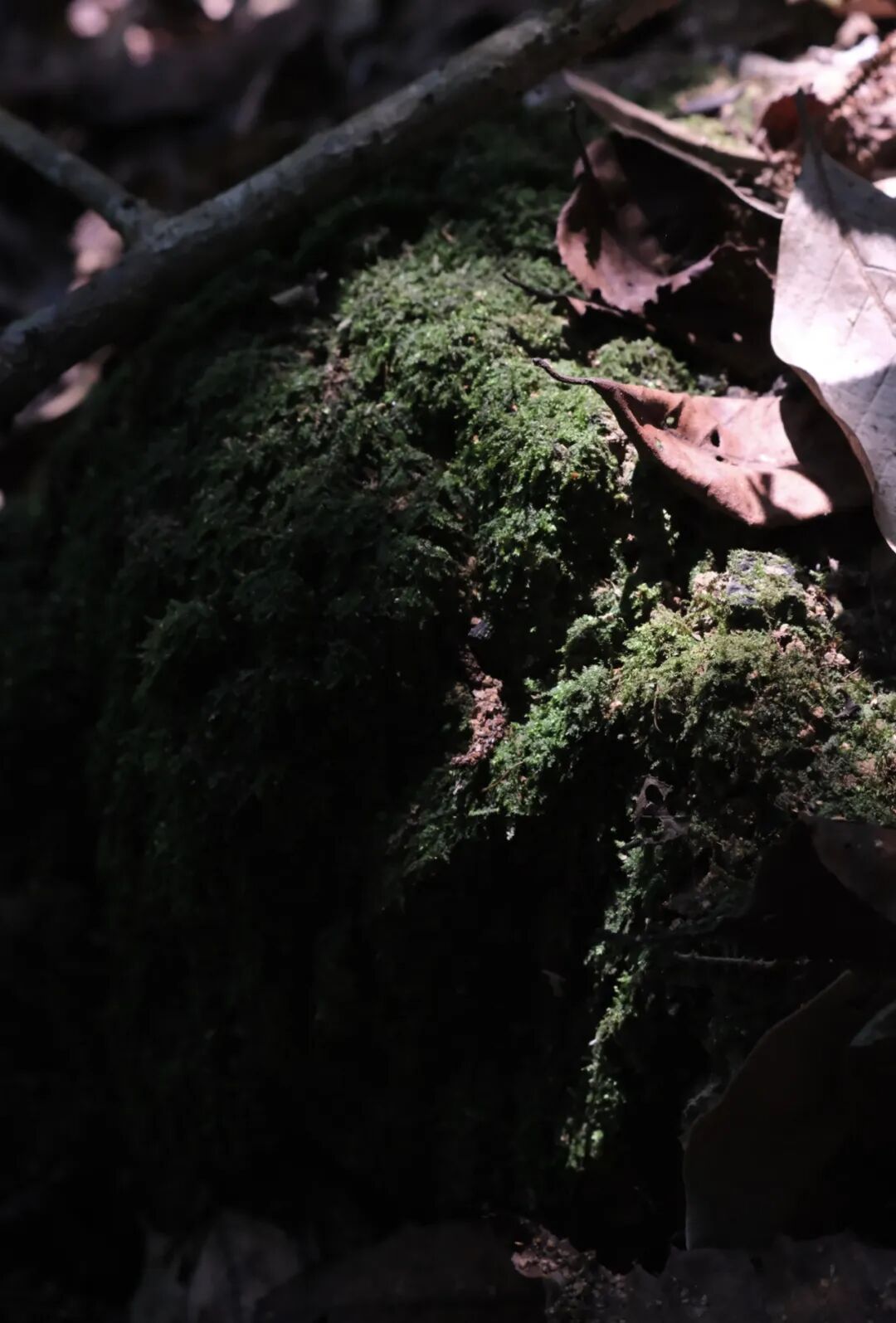
我们从停车处启程,换乘摩托深入山林。
土路崎岖不平,减震器颠得几乎散架,颠簸了整整四十分钟,才抵达茶林入口。
再往里走,连摩托车也无法通行,只能徒步沿山路向上攀爬。
这片茶林的主人是一位当地老茶农,性格倔强出了名。
无论外界出多少钱,他从不肯对茶树进行过度干预,也不修剪、不改造,任由茶树顺应森林的自然节奏生长。
走进去那一刻,你才能真正理解什么叫原始森林茶地。
高大的乔木遮蔽了天空,只有斑驳的阳光从叶隙间洒落,铺满落叶的地面如同柔软的地毯。
山风拂过,满鼻都是腐叶与树木的清芬,飞虫顺着衣领往身上钻,须得不停地挥手驱赶才能前行。
四周静得出奇,只能听见自己的脚步声,偶尔几声鸟鸣,反倒衬得山林更加幽深。
这样的生态环境,是任何外面所谓"生态种植"的茶园穷尽一生也无法模仿的。
野放的茶树,长出来是什么样
茶树与森林中的其他植物交织共生,与杂树、藤蔓相互争夺阳光与养分。
为了生存,根系必须深深扎入土壤,枝干则不断向上伸展。
因此这里的古茶树大多高大挺拔,采摘时需要攀爬到树冠高处。
我们到达时,采茶的师傅们已经在树冠间忙碌,只听见树叶沙沙作响,却不见人影。
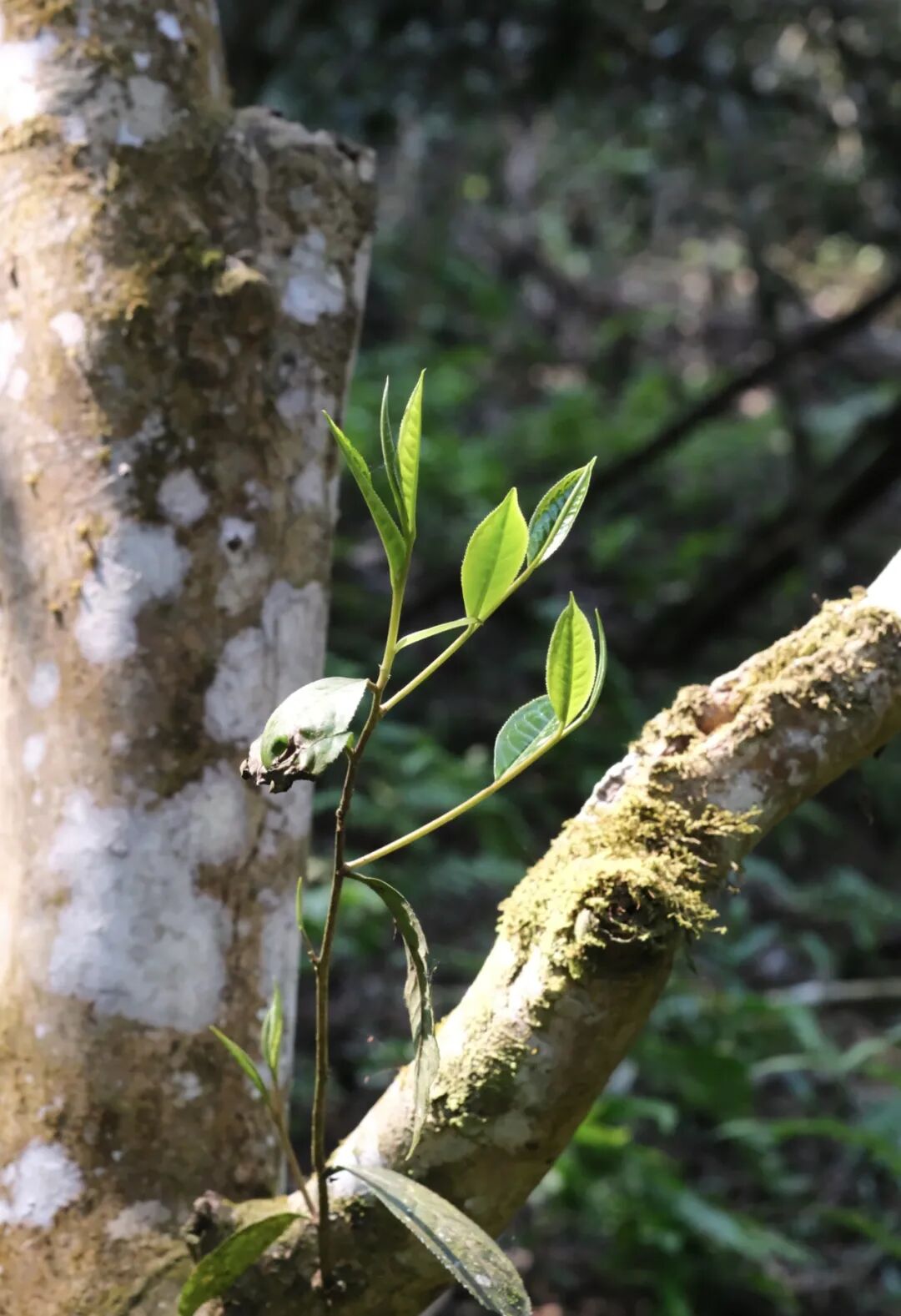
待采茶师傅下树整理鲜叶时,我凑近细看。
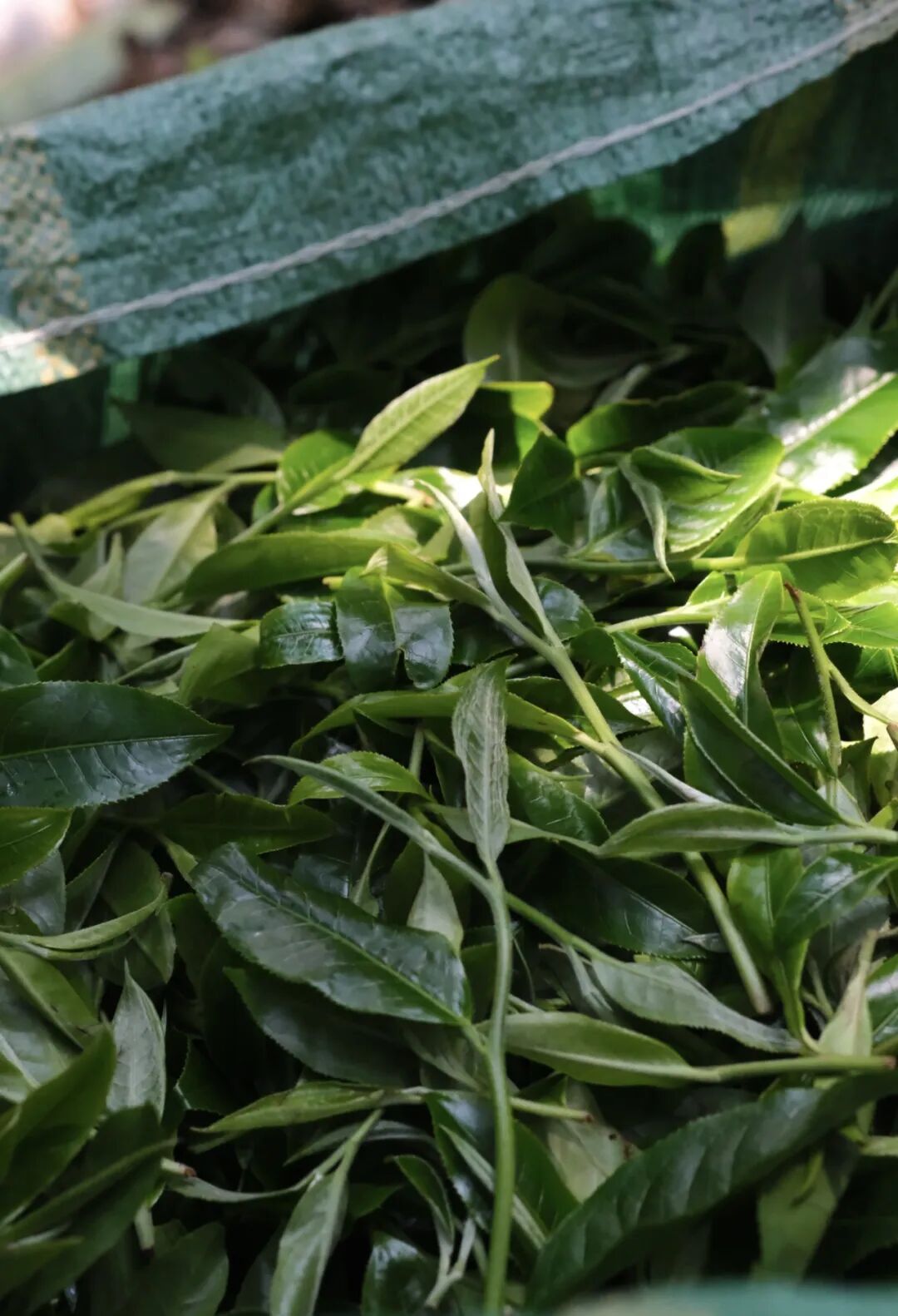
桃子寨的鲜叶,比想象中更为肥硕壮实。
叶片呈深墨绿色,表面覆着一层细密的绒毛,触感厚实而有韧性,是大叶种茶的典型特征。
因生态优良、养分充足,每一片叶子都散发着蓬勃的生命力。
刚采下的鲜叶凑近轻嗅,能闻到淡淡的清花香,夹杂着一丝森林特有的青苔湿气。那不是张扬的香气,而是内敛而深沉的草木之韵。
茶农蹲在一旁抽烟,他说这片地从来不用他费心。
每年只需等茶发芽,派人采摘,采完便走,其余的交给茶树自己生长。
我问:"现在外面都讲究精细化管理,您不怕产量跟不上?"
他弹了弹烟灰,说茶树和人一样,管得太细反而活不好,任由它自然生长,采出来的茶才够劲道。
我听后无言,内心深表认同。
世间万物大抵如此——越是急于求成,越容易丢掉最本真的味道。
唯有顺应自然、慢慢沉淀,才能留住真正的精华。
一口喝中,原来这才是真桃子
从茶林返回茶农家中,已是午后时分。
主人家取出今年新制的头春古树茶,为我们冲泡品饮。
沸水注入,揭开壶盖,香气并非那种冲鼻的高扬之香,而是缓缓沉入茶汤中的山野花韵。
第一口下去,最强烈的感受便是清透而鲜活。
一股清甜自舌尖蔓延开来,不是那种腻人的甜,而是从茶叶内部透发出来的植物本甜。
紧随其后,舌尖泛起细微的涩感,转瞬之间便顺着喉部化开。
紧接着,生津源源不绝,整个口腔充满润泽之感,舌底不断泛起甘甜——这样的美好体验,许久未在其它茶品中感受到了。
从茶林返回茶农家中,已是午后时分。
她们说,习惯了倚邦高杆的甜润,这泡茶初入口并不讨喜,带着一股子刚劲,不够顺滑。
但我却一口便爱上了它。
许多人品饮普洱,第一追求便是纯甜,追求无苦无涩,认为这才是好茶的标准。
而桃子寨的过人之处,恰恰不在于单一的甜润,而在于茶汤层次的极度丰富。
细细品味,便能察觉它的精妙——既有易武茶的甜柔细腻,又承袭了蛮砖茶原本的厚重粗犷。
香气不浮于表面,而是深深沉入茶汤之中,无论冲泡几道,香气始终不散。
茶气充沛,一杯入喉,不过片刻,后背便开始缓缓发热。那种由内而外的通透之感,是许多小众产区茶难以企及的。
它的滋味是分层次的:初尝有甜,继而生涩,涩感化开则生津涌现,生津之后回甘萦绕喉间,甚至隐约透出几分桃香般的清甜。
层层递进,每一口都有不同的感受——这正是古树茶最令人心醉的魅力所在。
若你只追求单一的甜,不如直接饮用糖水,又何必品茶。
喝茶和人生,道理其实一样
坐在院中,品至第三泡,心中忽然生出许多感慨。
喝茶如人生,这话看似玄妙,置于今日之境,却再贴切不过。
当今许多人生活,都在追求"顺"——追求无苦无涩,追求单一的甜。
找工作要找一眼望到头的安稳,过日子要按部就班不容差错,连喝茶也要喝毫无滋味起伏的纯甜。
然而这样的人生,与那杯寡淡无味的糖水茶有何分别?
两口便尽,留不下任何余韵。
反而是那些历经起伏、见过不同风景、尝过苦难的人生,如同今日这杯桃子寨——有甜有涩,有层次有厚度,越品越有滋味。
放眼这片茶地,主人家从不刻意干预,任由茶树在森林中自主争夺养分,与万物竞生。
看似未曾"精心照料",却孕育出最具生命力的茶叶,酿造出最有层次的茶汤。
人生,何尝不是如此。
一路坦途、未曾经历风雨的人生,未必比那些跌过跤、走过弯路的人生更加丰盈。
那些曾经的挣扎、苦难、邂逅的种种人事,最终都会沉淀为你生命中的厚度,铸就你独有的气质。
如同桃子寨的茶,陈放三五年后再品,苦涩褪去,醇厚温润的本底渐渐显现——越陈越香,越久越甜。
这是时光对富有层次之物最丰厚的馈赠。
临别时,主人家告知,今年核心区的产量有限,所能提供的并不多,售罄即止。
我点头称是。好物从来稀少,能品到一口真味,已然足够。
此番寻茶之旅让我愈发明白一个道理:
真正的好茶,从来不是靠声名堆砌出来的,而是深藏山林,以自身的滋味说话。
你必须愿意跋涉最远的路、攀登最陡的坡,才能品到最本真的那一口。
如同想要活出丰盈的人生,就必须勇于跳出安稳的舒适区,去见识不同的风景,接纳不同的滋味。
单一的甜或许讨喜,但丰富的层次才最让人回味无穷。
这是桃子寨教会我的事,也是此番寻茶之旅最值得铭记的感悟。
On April 1, 2026, I walked deep into the state forest of Manzhuan, Xishuangbanna.
Before setting out, I reviewed some notes. The internet abounds with those who hail Taozizhai as "the pinnacle of Manzhuan."
I merely smiled. Over the years I have tasted no fewer than a dozen teas bearing the Taozizhai name, most of them utterly unremarkable, leaving no trace in my memory.
This time, I resolved to venture into the true core and explore the most pristine tea forest.
Only after walking this path did I feel worthy of writing this record. Those who truly understand tea will recognize its worth.
Taozizhai Is Not a Village — It Is a Tea Mountain
Many, upon first hearing the name "Taozizhai," assume it is the name of a Yi or Dai village.
In truth, it is not. Taozizhai is merely a designation for one tea-growing area within the Manzhuan state forest.
In recent years, as its reputation has grown, teas from several surrounding mountains have begun to be marketed under the Taozizhai name.
As with many celebrated small terroirs: the more famous it becomes, the blurrier its boundaries grow, and the more deeply the genuine articles are concealed.
Manzhuan occupies the very center of the Six Great Ancient Tea Mountains, nestled between the famous names of Yibang and Yiwu. In days past, few singled it out for its character.
It was only in recent years, when more and more experienced tea drinkers returned to seek the depth and weight of Manzhuan, that this small terroir, hidden within the forest, was rediscovered.
We set out from the parking area and switched to motorbikes to venture deeper into the mountains.
The dirt road was rough and uneven; the shock absorbers rattled as if falling apart. Forty minutes of jolting brought us to the entrance of the tea forest.
Further on, even motorbikes could not pass. We continued on foot, climbing the mountain trail.
The owner of this tea forest is a local tea farmer, notorious for his stubborn character.
No matter what price anyone offers, he refuses to interfere excessively with his trees, nor does he prune or alter them. He lets them grow according to the rhythm of the forest.
Only when you step inside that forest do you truly understand what a primeval tea forest looks like.
Tall canopy trees block out the sky, with dappled sunlight filtering through gaps in the leaves onto a carpet of fallen leaves. The earth beneath feels soft, like a carpet.
When the wind blows, your nose fills with the clear fragrance of decaying leaves and timber. Flying insects crawl into your collar, and you must keep swatting them away just to move.
The surrounding silence is startling. You hear only your own footsteps. Occasional bird calls only make the forest seem even deeper.
This kind of ecological environment is something that any so-called "eco-farmed" tea garden outside could never hope to replicate in a lifetime.
What Wild-Planted Tea Trees Look Like
The tea trees grow intertwined with other plants of the forest, competing with other trees and vines for sunlight and nutrients.
To survive, their roots must dig deep into the soil, and their branches stretch ever upward.
Therefore, the ancient tea trees here are mostly tall and straight, and harvesting requires climbing to the high canopy.
By the time we arrived, the tea pickers were already busy among the branches. Only the rustling of leaves could be heard; no people were in sight.
When the pickers descended and sorted the fresh leaves, I leaned close to examine them.
The fresh leaves of Taozizhai were even more plump and robust than I had imagined.
The leaves were a deep dark green, covered with a fine layer of fuzz. Thick and resilient to the touch — a classic characteristic of large-leaf varietals.
Because the ecology is excellent and nutrients plentiful, every leaf radiates with vigorous vitality.
Bringing a freshly picked leaf close, one catches a faint floral fragrance intertwined with the peculiar mossy dampness of the forest. Not an assertive aroma, but one that is restrained and deep — the essence of living timber.
The farmer squatted nearby, smoking. He said this land never required his concern.
Each year, he simply waits for the buds to emerge, sends people to harvest, and once gathered, leaves the rest to the trees.
I asked him, "Nowadays everyone advocates meticulous management. Aren't you afraid yields will be insufficient?"
He flicked his ash and said that tea trees, like people, do not thrive when managed too closely. Let them grow naturally, and the tea they produce will be strong.
I was speechless, and deeply agreed.
So it is with all things in this world — the more one rushes for success, the easier it is to lose the most authentic flavor.
Only by following nature and slowly settling can one preserve the true essence.
The First Sip — This Is What Real Taozizhai Tastes Like
Returning to the farmer's home from the tea forest, it was already past noon.
The farmer took out this year's newly made first-flush ancient tree tea and brewed it for us.
As boiling water poured in and the lid was lifted, the aroma was not the kind that assaults the nose. Instead, it was a wild floral fragrance that sank slowly into the tea liquor.
The first sip brought the strongest impression of clarity and freshness.
A clear sweetness spread across the tip of the tongue — not a cloying sweetness, but a plant-based sweetness that emanated from within the leaf itself.
Following closely, a subtle astringency arose on the tongue tip, which within moments dissolved and flowed down the throat.
Then came an unceasing stream of sweetness. The entire mouth filled with moisture, sweet nectar continuously rising from the bottom of the tongue — such a wonderful experience had not been encountered in other teas for a long time.
Among the tea-loving ladies present, the first sip made most of them frown.
They said, accustomed to the sweetness and smoothness of Yibang gaogan, this tea did not win them over on the first sip — it entered with a certain force, lacking immediate smoothness.
But I fell in love with it on the very first sip.
Many who drink pu-erh seek pure sweetness from the very first sip, seeking no bitterness and no astringency, believing that is the standard of good tea.
Yet the true strength of Taozizhai lies precisely not in singular sweetness, but in the extraordinary richness and depth of the liquor.
Drink carefully and you can discern its subtlety — it possesses both the sweet delicacy of Yiwu tea and the original weight and boldness of Manzhuan.
The fragrance does not float on the surface; it sinks deep into the liquor. No matter how many infusions, the aroma never dissipates.
The tea qi is substantial. Within minutes of one cup, the entire back begins to warm gradually. That sense of clarity from within — many small-terroir teas cannot match this.
Its flavor is layered: the first sip offers sweetness, then a hint of astringency; when the astringency dissolves, sweetness surges; after that, a lingering huigan remains in the throat, even revealing a faint peach-like sweetness.
Layer upon layer, every sip reveals a different sensation — this is precisely what makes ancient tree tea so captivating.
If one seeks only singular sweetness, why not drink sugared water instead of tea?
Tea and Life — The Same Principles
Sitting in the courtyard, on the third infusion, a wave of reflections came over me.
"Drinking tea is like life." This sounds somewhat mystical, yet placed in today's setting, it fits perfectly.
Many people today, in their lives, pursue "smoothness" — pursuing no bitterness and no astringency, pursuing singular sweetness.
Seeking jobs that offer stability at a glance; living life step by step without a single misstep; even drinking tea that has no flavor fluctuations at all.
But what difference is there between such a life and that flat, tasteless sugary tea?
Two sips and it is gone, leaving no aftertaste whatsoever.
Instead, it is those lives that have experienced ups and downs, seen different landscapes, tasted hardship — like today's cup of Taozizhai, with sweetness and astringency, layers and depth — that grow more rewarding with each sip.
Look at this tea field. The farmer never interferes deliberately, letting the trees compete for nutrients among themselves in the forest, growing alongside all living things.
This apparent neglect has produced the most vital leaves and brewed the most layered tea.
Is this not also true of human life?
A life of smooth sailing, never weathering any storm, is not necessarily more fulfilling than one that has stumbled and taken wrong turns.
Those struggles endured, those hardships tasted, those diverse people encountered — in the end they all become the thickness of your life, the unique character that defines you.
Like Taozizhai tea. Three to five years after storage, the bitterness fades, and the mellow, warm foundation slowly emerges — more fragrant with age, sweeter with time.
This is the most generous gift that time bestows upon things of depth.
As we were leaving, the farmer informed me that the yield from the core area this year is limited — there is not much available, and once sold, it is gone.
I nodded in agreement. Fine things are always scarce; being able to taste one sip of authenticity is already more than enough.
This tea-search journey has made me understand something ever more clearly:
Truly fine tea is never built up by reputation. It hides deep in the mountains and speaks through its own flavor.
You must be willing to tread the farthest roads and climb the steepest slopes to taste that most authentic sip.
Just as to live a fulfilling life, one must dare to step out of the comfort zone, to see different landscapes and accept different flavors.
Singular sweetness may be pleasing, but rich layers are what linger in the memory.
This is what Taozizhai taught me, and it is the insight worth cherishing most from this tea-search journey.